Sallisa: A Luxurious Script Font for Designers
There I was, staring at a blank brand board, trying to figure out how to make a new café’s identity feel both modern and timeless. The client wanted something that felt personal, almost like a handwritten note from the owner, but still professional enough for a business. That’s when I pulled up Sallisa, a script font with a soft, elegant touch that instantly caught my eye.
A Font That Feels Personal
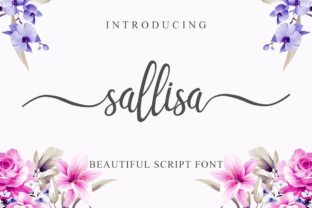
Sallisa is a beautiful script font that balances modernity with old-world charm. Its flowing lines and subtle swashes give it a sense of movement, as if it were written by hand rather than designed on a screen. The font has a refined, luxurious feel that makes it perfect for branding projects where elegance and personality matter. It doesn’t shout; it whispers, which is exactly what I needed for this café’s identity.
When I first tested Sallisa on a logo concept, I was struck by how well it paired with clean, minimal design elements. The font didn’t overwhelm the space, yet it added a unique character that made the logo stand out. It worked especially well when paired with a simple sans serif for contrast, creating a visual balance that felt both fresh and sophisticated.
Real-World Testing: From Logo to Packaging
I used Sallisa in a few different branding scenarios to see how it performed. On a business card, it looked polished and readable, even at smaller sizes. The fine details held up, and the font didn’t feel too ornate for such a practical piece. For a packaging mockup, Sallisa added a touch of class that elevated the overall design without being distracting.
On a website header, the font brought a sense of warmth and approachability. It wasn’t overly decorative, so it didn’t clash with the rest of the layout. In social media graphics, it helped create a cohesive look across different platforms, making the brand feel more unified and intentional.
Strengths and Limitations
Sallisa shines as a display or headline font. It’s not meant for long blocks of text, and that’s okay. Its beauty lies in its ability to draw attention and add personality to key elements of a design. When used in logos, it can convey a sense of craftsmanship and care, which is great for small businesses, boutiques, or creative studios.
However, there are some limitations. At very small sizes, the details can become a bit lost, making it less ideal for body text or labels that need to be easily readable. It also might not be the best choice for formal corporate branding, where a more neutral typeface would be preferred. But for brands that want to feel human and authentic, Sallisa is an excellent choice.
Pairing Sallisa with Other Fonts
One of the most useful aspects of Sallisa is how well it pairs with other fonts. I found that it works beautifully with a classic serif font for a traditional yet modern look. It also contrasts nicely with a clean sans serif, creating a dynamic visual hierarchy that guides the viewer’s eye naturally.
For a more casual feel, pairing it with a handwritten font can add depth and texture. But if you’re going for a minimalist aesthetic, sticking with a simple sans serif or a modern typography system can keep the design from feeling cluttered.
Practical Tips for Using Sallisa
If you’re considering using Sallisa in your next project, test it in different contexts before finalizing any designs. Try it on a shop sign, product mockup, or packaging label to see how it holds up in real-world applications. Pay attention to how it looks at various sizes and in different lighting conditions.
Also, check the font’s file formats and webfont availability. Make sure it’s compatible with the tools you use and that you have the right licensing for commercial projects. Always review the terms of use to avoid any legal issues down the line.
Ultimately, Sallisa is a premium font that brings a sense of refinement to any design. Whether you’re working on a logo, packaging, or social media graphic, it adds a touch of elegance that can elevate your work. It’s not a one-size-fits-all solution, but for the right project, it can be a game-changer.